

Best Niches for Blogging with Low Competition in 2026 (10 Untapped Ideas)
Blogging with low competition in 2026 is like discovering real estate in a town before the highway arrives—if you move now, you can claim prime land while everyone else is still fighting over scraps in the crowded neighborhoods. The secret isn’t finding a niche no one’s heard of; it’s finding underserved angles in growing markets where you can actually rank without screaming into the void.
What “low competition” actually means in 2026
Low-competition niches don’t mean zero demand or zero bloggers. They mean keyword difficulty under 40, search volume that’s respectable but not oversaturated (5,000–50,000 monthly searches), and major publishers haven’t poured resources into dominating the space yet.
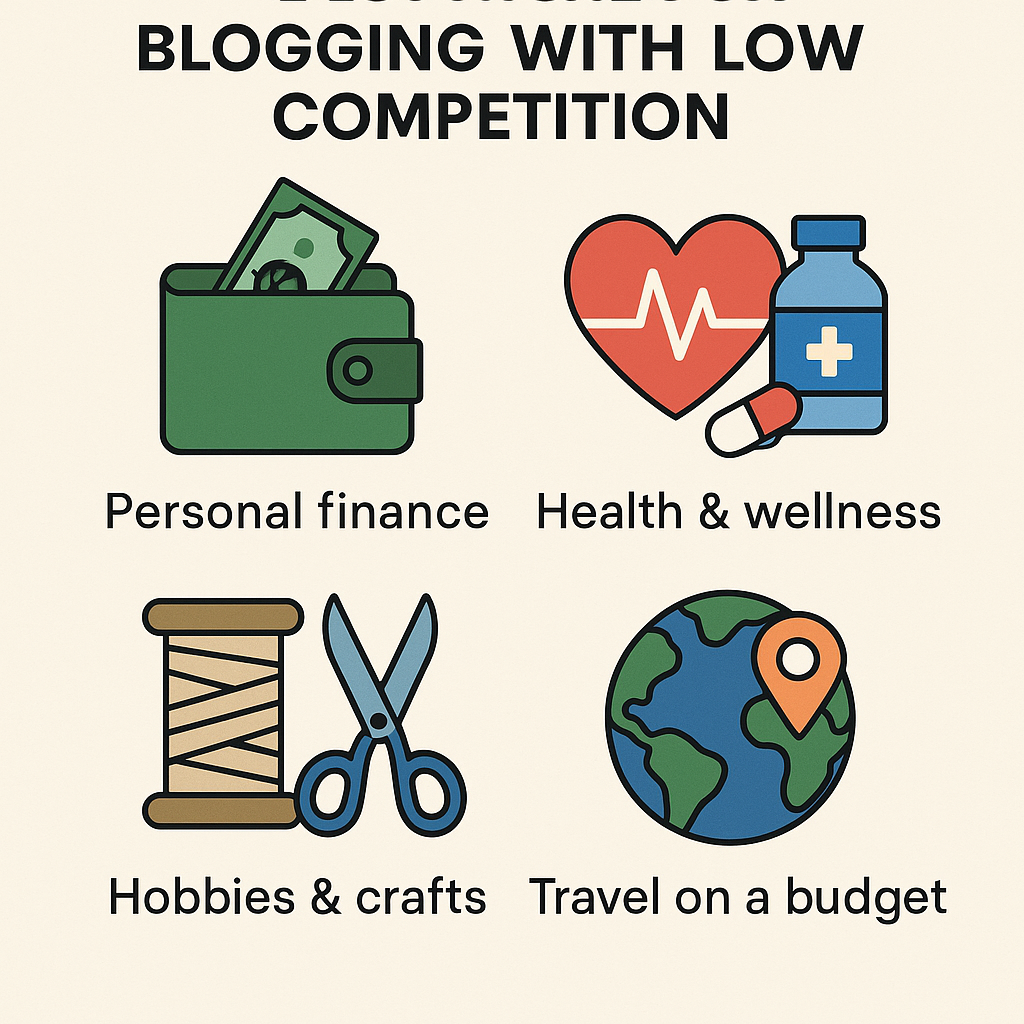
The best low-competition niches sit at the intersection of: growing interest, underserved audiences, and fewer established competitors willing to fight for attention. These are what strategists call “blue ocean” opportunities—untapped market space instead of the crowded “red ocean” everyone’s already battling in.
Top low-competition blogging niches in 2026
1. Sustainable living and zero waste
The zero-waste market hit $2.19 billion in 2023 and is projected to reach $4.68 billion by 2032—that’s 8.8% annual growth—with remarkably light competition on the blogging side. Most content about sustainability stays vague; specific, actionable guides for zero-waste home setups, natural product swaps, and waste reduction for families are wide open.
Why it works: Readers actively searching for sustainable swaps are motivated buyers for eco-friendly products, courses, and digital tools.
2. Off-the-beaten-path travel and hidden destinations
Travel blogging looks oversaturated until you zoom into specific angles. While everyone covers Paris and Bali, underrated destinations like Saskatchewan’s Grasslands National Park, Tulsa, or Moloka’i have minimal coverage but steady interest from travelers seeking authentic, crowd-free experiences.
The monetization angle: Local tourism boards, booking platforms for less-known hotels, sustainable travel experiences, and niche travel guides all want exposure in these spaces.
3. Urban gardening and microgreens
Growing food in tiny apartments is booming—microgreens, herbs on windowsills, balcony gardens for apartment dwellers—but blog coverage remains sparse. While traditional gardening blogs dominate for outdoor setups, hydroponic systems, indoor lighting solutions, and apartment-friendly growing techniques are barely covered.

Why it works: Apartment dwellers are engaged, motivated readers who want to buy seeds, hydroponic kits, grow lights, and related gear.
4. Solar energy and renewable home systems
Solar is experiencing massive growth—searches for “solar panel” and “solar panel price” have soared 100x since 2010, with CPC as high as $800–1,200 in the US market. Yet blogging coverage lags behind the demand for practical homeowner guides.
Monetization is robust: affiliate links to solar providers, product reviews, cost calculators, and local service connections all convert.
5. Remote work and digital nomad lifestyle
Remote work demand is massive but fragmented. Specific niches like “remote work for introverts,” “digital nomad families with kids,” or “remote work logistics in specific regions” have pockets of demand with minimal competition.
Why it works: Digital nomads and remote workers are actively seeking tools, accommodation advice, and lifestyle optimization—lots of monetization vectors.

6. Gut health and microbiome
Gut health is trending hard (60% of consumers post-pandemic are more conscious of health), and while health blogs exist, specific focus on gut bacteria, microbiome optimization, and dietary interventions remains underserved. It’s YMYL-adjacent but not as restricted as general medical advice if you focus on lifestyle and nutrition science.
Why it works: Health-conscious readers buy supplements, testing kits, and courses on this topic.

7. Pet care and pet nutrition
Pet ownership is stable and loving—pet parents spend freely. But while pet blogs exist, niches like “raw feeding for dogs,” “senior pet care,” or “exotic pet nutrition” have search demand with minimal blog competition.
Monetization: Pet product affiliates, vet consultations, custom meal plan services, and courses on pet health all work.
8. Ethical fashion and slow fashion
Fashion blogging is crowded for trends, but ethical fashion—fair labor practices, sustainable materials, secondhand shopping, and clothing longevity—has grown audience interest with sparse coverage. Most fashion blogs still chase trends; slow fashion creators are rare.
Why it works: Ethical consumers actively seek alternatives to fast fashion and want guidance on sustainable brands.
9. Niche B2C sales strategies
B2C sales shows +300% growth over 10 years with only 32% competition—the lowest in many analyses. If you have sales experience, blogging about client acquisition for specific B2C niches (fitness coaches, consultants, freelancers) is wide open.
Why it works: Service-based entrepreneurs constantly look for sales funnels and customer acquisition tricks.
10. Stress management and nervous system health
While mental health blogging exists, specific focus on nervous system regulation, somatic practices, and stress-physiology remains relatively underserved. Readers interested in vagal toning, breathwork, and science-backed stress techniques are motivated and engaged.

The Blue Ocean Strategy for low-competition niches

Honestly, the smartest way to succeed in 2026 is to apply the Blue Ocean Strategy framework: stop competing in crowded niches and instead create uncontested market space by finding an underserved angle.
Here’s the formula:
-
Identify what the red ocean (saturated niches) competes on – Price, features, trends.
-
Eliminate factors the industry wastes time on – Are fitness blogs obsessing over celebrity workouts? Eliminate that; focus on accessible workouts.
-
Reduce factors that are oversupplied – If every gardening blog covers outdoor yards, reduce that and focus on micro-spaces.
-
Raise undervalued factors – Emphasize what competitors neglect: science-backing, accessibility, sustainability, or personalization.
-
Create entirely new elements – Introduce what no one’s covering: hyper-local guides, audience-specific angles, or new intersections.


Example: Instead of “fitness blogging” (red ocean), create a blue ocean as “fitness for people with chronic pain.” Fewer competitors, more underserved audience, clear monetization.
EEAT and low-competition niches: the advantage
Here’s the surprising bonus: lower-competition niches are easier to build EEAT in. You can establish authority faster with fewer competitors trying to drown you out.
If you pick low-competition urban gardening and publish 30 detailed, original posts on apartment-growing systems, you’ll build real topical authority. In high-competition niches like “fitness,” you’d need 300 posts plus celebrity backing just to compete.
FAQs: low-competition blogging niches
What’s a good keyword difficulty range for a new blog?
Aim for keywords under 40 keyword difficulty (KD) initially; as your authority grows, you can gradually target 40–60 KD keywords, saving highly competitive (60+) terms for established sites.

Is low search volume a problem?
Not if you’re patient. Even 5,000–10,000 monthly searches in a tight niche can sustain a profitable blog if you rank for multiple keywords and have good monetization—quality beats volume.
Can I still make good money in a low-competition niche?
Absolutely. High-CPC niches like solar ($800+), remote work, and pet health show that lower competition doesn’t mean lower earnings if monetization is strong.
How do I know if a niche truly has low competition?
Use tools like Semrush, Ahrefs, or free tier options to check keyword difficulty, search volume, and existing blog strength; if top-ranking pages are thin, outdated, or from weak domains, that’s your signal.

What if I’m interested in a low-competition niche but have no expertise?
You can learn; the advantage of low-competition niches is that you have time to build expertise without battling established authorities, though you’ll want to be genuinely interested enough to sustain it.
How to find your low-competition niche
Here’s a practical 5-step hunt:
-
Brainstorm 10 topics you’re curious about – Not just profitable-sounding; genuinely interested.
-
Run each through competition analysis – Use Ahrefs free tier, Ubersuggest, or SEMrush to check keyword difficulty.
-
Look at page-one results – Are they thin? Outdated? From weak domains? That’s green light; written by big publishers? Red flag.
-
Verify demand – Check Google Trends, Reddit, Quora, and TikTok for real interest in that topic.
-
Assess monetization – Can you see affiliate programs, product sales, service offerings, or ad networks in this space?
Your move: finding your blue ocean niche
The lesson here is simple: you don’t need to out-muscle giants in crowded spaces. You need to find a blue ocean where your depth of knowledge, unique angle, and consistent effort let you dominate without competition.
If you’re stuck between a few low-competition niches, share which ones you’re considering, your genuine interest level, and your experience or willingness to learn. With that, a concrete blue-ocean blogging strategy tailored to your situation can be mapped out for 2026.